
How Slot RTP and Volatility Really Work (An Ontario Player’s Guide)

Two numbers decide how a slot actually behaves, and most players never look at either. One is RTP — how much a game pays back over the long run. The other is volatility — how that payback arrives, in a steady drip or in rare thunderclaps. Learn to read both and the marketing stops mattering; you’ll pick games that fit your bankroll and your temperament instead of chasing whatever the lobby pushes at you. I dealt with slot machines from both sides — years feeding coins into them at the Legion in Sudbury, then a decade on the floor at Casino Rama watching how they really pay — and these two numbers are what I check before anything else. Here’s how they work, in plain English.
RTP: the number that decides your long-run return
RTP stands for return-to-player, and it’s the percentage of all the money wagered on a slot that the game pays back over an enormous number of spins. A slot with 96% RTP returns $96 for every $100 staked across its entire lifetime, spread across everyone who plays it. The remaining $4 is the house edge — the casino’s mathematical margin. Higher RTP means a smaller edge against you, so as a rule, higher is better.
The difference between RTP figures is real money over time. A 96% slot versus a 94% slot doesn’t sound like much, but that’s a doubled house edge — 4% versus 6% — and over thousands of spins it adds up. Most quality slots sit somewhere between 94% and 97%. As a habit, favour games at 96% or above when you have the choice, and treat anything below 94% with suspicion unless there’s a specific reason (some jackpot games run lower base RTP, which I’ll come back to).
What RTP is NOT
This is where players trip themselves up, so let me be blunt about it. RTP is a long-run average, not a promise about your session. A 96% slot does not mean you’ll get $96 back from your next $100 — you might win big, you might lose it all, because RTP only asserts itself over hundreds of thousands of spins, not your Tuesday evening. Any given session is dominated by variance, not by the RTP figure.
So you can absolutely lose on a 98% slot and win on a 92% one in a single sitting. That’s not the RTP being wrong; it’s just how averages work across huge numbers. The practical consequence: RTP tells you which game is a better long-term bet, but it guarantees nothing about tonight. That’s exactly why the second number — volatility — matters just as much, because it describes what actually happens in the short run where you really live.
The same game can run different RTPs — check which one
Here’s the fact that genuinely puts you ahead of most players: many slots ship with multiple RTP settings, and the casino chooses which one to run. A single popular title might be available to operators at 96%, 94%, and lower configurations — the same game, the same graphics, quietly paying back different amounts depending on which version the site deployed. This isn’t a conspiracy; it’s how the studios sell their games, and it’s disclosed. But it means the exact same slot can be a better bet at one Ontario casino than another.
At registered Ontario casinos, RTP is independently tested, so the figure you’re shown is genuine — but you have to actually look. A good operator publishes the RTP of the version it runs; a cynical one stays quiet and hopes you won’t ask. My rule: favour operators that publish per-game RTP and run the higher-return versions, and if a site hides which version it’s serving, that tells you something about how it sees its players.
Volatility: how the money actually arrives
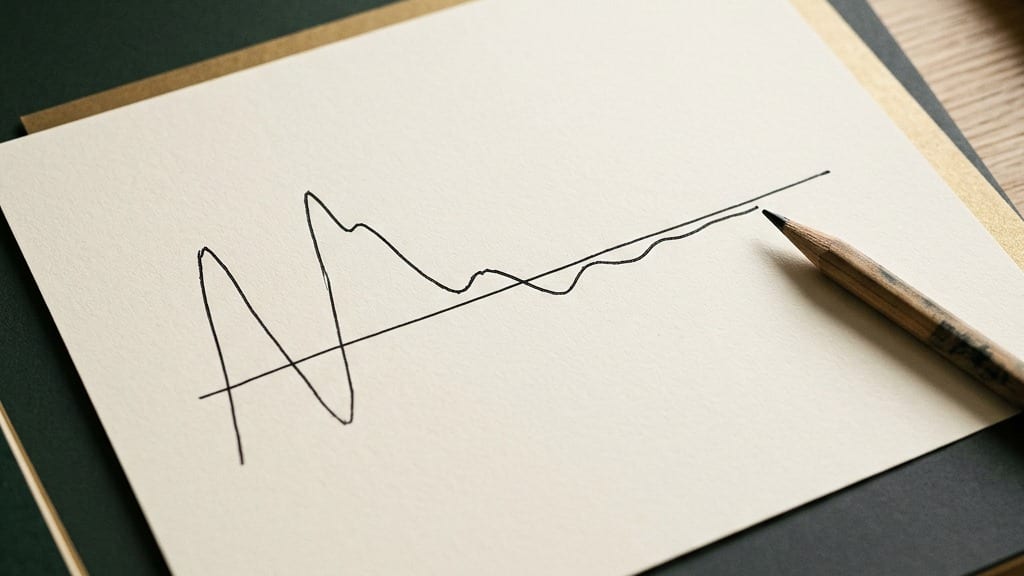
If RTP is how much a slot pays back, volatility (also called variance) is how it pays back — and two slots with identical RTP can feel like completely different games because of it. Volatility describes the pattern of wins: their size and frequency.
A low-volatility slot pays small wins often. The reels land something frequently, your balance ticks along in gentle waves, and long dry spells are rare. It’s steady and forgiving — easy on a bankroll, good for a long session, and less likely to wipe you out in a hurry. A high-volatility slot is the opposite: it pays rarely, but when it pays, it can pay big. You’ll sit through long stretches of nothing, punctuated by the occasional substantial hit. It’s a rollercoaster, and it demands a bankroll that can survive the dry spells long enough to reach the good moments. Medium volatility sits in between, which is where a lot of popular slots land.
Neither volatility is “better” — they suit different players
This is the key insight, and it’s where matching the game to yourself comes in. High volatility isn’t better than low, or vice versa — they suit different goals, temperaments, and bankrolls. The mistake is playing the wrong one for your situation.
If you’re playing for entertainment over a long evening on a modest bankroll, low or medium volatility is your friend — it stretches your money, keeps the game ticking, and won’t drain you in ten brutal minutes. If you’re specifically chasing a big score, you have a bankroll that can absorb the swings, and you can emotionally handle long losing runs without chasing, then high volatility is the ride you want. The catastrophe is a small bankroll on a high-volatility slot: you’ll often burn through it during a dry spell before the game ever reaches one of its rare big payouts. I watched people make exactly that mistake on the Casino Rama floor for years — playing a punishing high-variance game on money that couldn’t survive it, then blaming the machine. The machine was fine. The match was wrong.
Hit frequency and the mechanics around the numbers
Two more terms round out the picture. Hit frequency is how often a slot lands any win at all — closely related to volatility, but not identical. A game can have decent hit frequency (you win small amounts fairly often) while still being high-volatility (the wins that matter are rare and large). It shapes the texture of play alongside variance.
Then there are the mechanics: paylines, ways-to-win, cluster pays, cascading reels, and modern formats like Megaways that change the number of ways to win each spin. Here’s the honest truth about all of them — a flashy mechanic doesn’t improve your odds. The RTP already accounts for everything the game does, features included. What the mechanics change is the experience: how wins are built, how bonus rounds trigger, how the game feels. So understand the mechanic to know what you’re playing and whether you’ll enjoy it — not because it tilts the maths in your favour. It doesn’t.
Putting RTP and volatility together
The two numbers work as a pair, and reading them together is the whole skill. RTP tells you the long-term quality of the bet; volatility tells you what the ride will feel like and what bankroll it demands. A high-RTP, low-volatility slot is the gentlest long-session choice. A high-RTP, high-volatility slot is a better-value big-score chase. A low-RTP, high-volatility slot — which describes a lot of jackpot games — is the most punishing on paper, and worth going in with eyes open.
Before I play a slot, I want to know both figures and match them to what I’m actually doing that session. Long, relaxed evening on a set budget? High RTP, lower volatility. Feeling like a shot at something big and can afford to lose the stake? High RTP, higher volatility, and a bankroll sized for the swings. It takes thirty seconds to check, and it’s the difference between playing slots with your eyes open and just pressing spin and hoping.
How to find these numbers before you play
Knowing what RTP and volatility mean is only useful if you can find them, so here’s where to look. RTP is usually published in the game’s info or paytable screen — the little “i” or menu button that opens the rules — and a good Ontario operator will surface it there or in the game’s description. If you can’t find it anywhere, that’s itself a small signal about the operator. Volatility is sometimes stated outright (“high volatility” in the game description), and where it isn’t, the studio’s reputation and the game’s max-win figure are decent proxies — a slot advertising a 10,000x-plus top prize is almost certainly high-volatility, because that kind of ceiling only exists alongside long dry spells.
A quick worked example ties it together. Say you’ve got a $100 bankroll for a relaxed evening. On a low-volatility slot at a small stake per spin, that $100 might give you a couple of hours of play with frequent small wins topping you up — entertainment that lasts. Put the same $100 on a high-volatility slot at the same stake, and you could easily see it gone in fifteen minutes during a dry spell, or occasionally turned into a big hit — but the former is far more likely. Same money, same RTP potentially, wildly different experience. If your goal was “a fun evening,” the low-volatility choice delivered it and the high-volatility one probably didn’t. That’s the whole reason to check volatility before you spin: it’s the number that decides whether your bankroll matches your intention.
Where Ontario’s regulation fits in
None of this means anything if the numbers are fake. At an AGCO-registered Ontario casino, games are independently tested to confirm the random number generator is genuinely random and the advertised RTP is real — so the figures you’re reading can be trusted. At an unregulated offshore site, you have no such guarantee; the RTP could be a marketing number with nothing behind it. That’s why I only play, and only recommend, casinos you can verify on the iGaming Ontario register — the same principle behind spotting a safe Ontario casino. Trustworthy RTP is a feature of regulation, not a promise you should take from any site at its word.
RTP and volatility FAQ
What is a good RTP for a slot?
Favour 96% or above where you can. Most quality slots run 94–97%. The difference between 96% and 94% is a doubled house edge, which adds up over time. Some jackpot slots run lower base RTP because return is diverted to the jackpot pool — check the specific game’s published figure.
Does high RTP mean I’ll win?
No. RTP is a long-run average across hundreds of thousands of spins, not a promise about your session. You can lose on a 98% slot and win on a 92% one in a single sitting — that’s variance. RTP tells you the better long-term bet; volatility describes the short-run ride.
What does slot volatility mean?
Volatility (or variance) is how a slot pays: low-volatility games pay small wins often; high-volatility games pay rarely but large. Two slots with the same RTP can feel completely different because of it. Match volatility to your bankroll and goals — lower for long entertainment, higher for chasing a big hit.
Is high or low volatility better?
Neither — they suit different players. Low/medium volatility stretches a modest bankroll over a long session; high volatility suits chasing a big score with a bankroll that can absorb long dry spells. The common mistake is a small bankroll on a high-volatility slot, which often drains before the rare big win arrives.
Can the same slot have different RTPs at different casinos?
Yes. Many slots ship with multiple RTP settings and the casino chooses which to run — the same game can quietly pay back different amounts at different sites. At registered Ontario casinos the RTP is tested and genuine, but you have to look. Favour operators that publish per-game RTP and run the higher versions.
Do bonus features or Megaways improve my odds?
No. The RTP already accounts for every feature the game has. Mechanics like Megaways, cascades and bonus rounds change how the game feels and how wins are built, not your underlying odds. Enjoy them for the experience, but don’t treat them as improving your chances.
See our full list of verified licensed Ontarian casinos — every casino checked against the iGaming Ontario list of registered operators.
Explore Ontario slot sites →19+ only. Please gamble responsibly.
Free help available: connexontario.ca | Helpline: 1-866-531-2600
Related Posts